Sunday, May 5, 2024

Spring has Sprung


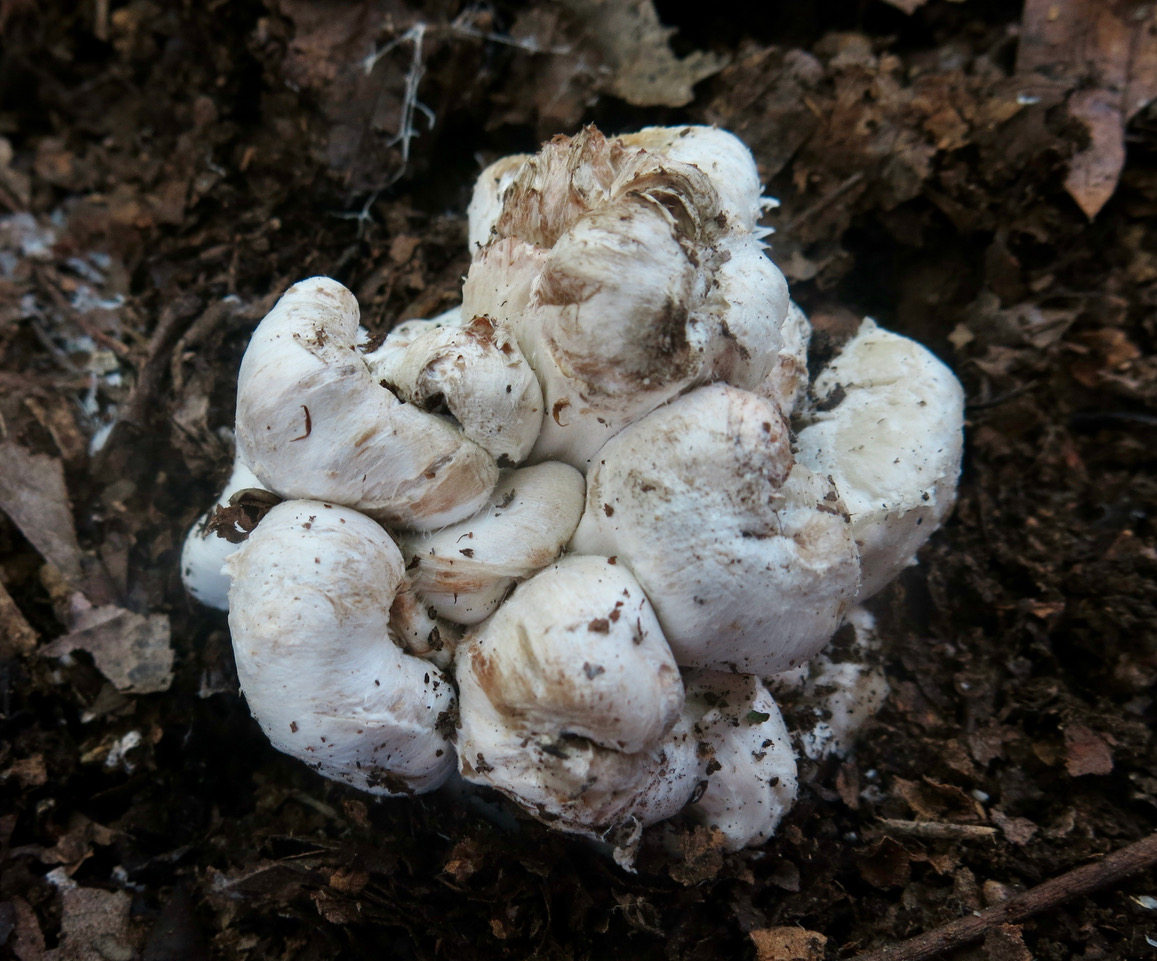
False indigo shrub (Amorpha fruticosa)


There was no doubt it is spring in the mind of these tiny bees that are swarming our false indigo in the back yard.  It is hard to see the individual flowers but the golden pollen is visible when you get up close. You can see the bees in action in this video.  Over 40 of them were crawling all over the flowers and each other. Their little legs were soon carrying golden saddlebags of pollen.

These are Western Honey Bees, Apis mellifera.  According to Wikipedia:

"The western honey bee or European honey bee (Apis mellifera) is the most common of the 7–12 species of honey bees worldwide. The genus name Apis is Latin for "bee", and mellifera is the Latin for "honey-bearing" or "honey carrying", referring to the species' production of honey."

According to the MDC Field Guide, the honeybee was made Missouri's official state insect in 1985.  This is a great honor as it isn't even a native species!  It is thought to have originated in Africa and then spread on its own to Europe. It is one of the first insects to be domesticated, and is now found on every continent except Antarctica.

Unlike other bees, honeybees collect pollen carry pollen in basket-like structures on their back legs.  These are referred to as "saddlebags." These allow them to carry pollen back to the nest, at times weighing up to 30% of their own body weight!!  Note to self- don't complain about carrying the groceries into the house!

Recent studies have shown how they managed to package the pollen load.  They have long hairs on their legs that hold on to the pollen.

"The researchers then tugged on some of the pollen pellets using elastic string. They found that the pellets, though seemingly precarious, were firmly attached: The force necessary to dislodge a pellet was about 20 times more than the force a bee typically experiences while flying."  Science.org

The scientific tools we now have are amazing.....almost as amazing as the Apis mellifera!


Saturday, April 27, 2024

Herping at Bull Mills


Red milksnake - Lampropeltis triangulum

(Guest Blog by Dave Shanholtzer)

I had a great day Wednesday exploring Bull Mills with Kevin from the SWMO Herp Society.  We flipped the first tin behind the barn and immediately found a yellow-bellied racer. 

Yellow-bellied Racer
We moved to the three stacks of tin I separated out along the fence behind the barn and in the first one found a red milk snake and between the three stacks over 20 ringneck snakes!  We also found a broadhead skink and five-lined skink. 

Slimy salamander with a nursery web spider

On the glade we found prairie lizards and a box turtle.  Under an old fiberglass boat in the small field below the glade we found two huge black rat snakes.  In the woods north of the cabin we found another box turtle, an Ozarks zig-zag salamander, and a western slimy salamander.  

Rat snake hunting in the barn rafters

Back at the barn we found another huge black rat snake in the rafters and our first yellow-bellied racer had a friend under another piece of tin behind the barn.  No timber rattlesnakes, pygmy rattlesnakes, or copperheads unfortunately. 

Finally we moved a few sheets of tin at the back of the barn, placing them along the fence to make a spot for timber rattlesnakes near where one was last year.  Now they have lots of cover for us to check. 

Editor's note:

Dave specializes in finding our timber rattlesnakes which seem to appear when he comes for a visit.  I may go a few years without seeing one, then he comes down and sees one on our drive.  Here was a Video on our driveway a few years ago.  Notice the rattle is immediately above the head, as a defensive position if a predator went after the source of sound.

Black rat snakes are our most common species, probably because they live in our cabin, house, and barn where we are likely to encounter them.  Search the blog for "rat snake" for lots more stories.

What is a stream?

What actually defines a stream?  Is it the water flowing on the edge of a bank or a gravel bar?  Does it extend below the gravel and into the soil among the tree roots overhanging the water's edge.  Dr. Deb Finn raises these interesting questions in the Missouri State Mind's Eye.

You can read the story at this Mind's Eye link.  Then for more information on Corethella kipferi, see this 2022 Blog.

Tuesday, March 12, 2024

Ticks are here!

The MDC Conservation Nature Calendar said this weekend is when the ticks come out.  Whether the ticks read the calendar to decide on their emergence is questionable, but it certainly was accurate.  I came home with 3 first instar and one second instars digging in to private places.  We now have our tick (scotch) tape out in the bathroom.

We have written before about winter ticks in this blog dating back to a 2011 blog so it was no real surprise.

I am posting this so you can hear one of our favorite Ozark musicians, Annie Shelton sing her song Tick Pickin Time in the Ozarks.  It was written by her grandmother and was performed this time with her dad Wayne on the porch at Shelton Hollow.

Now back to the tweezers............

More on Bull Creek ticks can be found in these past blogs.

Wednesday, January 31, 2024

Knowing Your Trees

Lois Zerrer reviews Knowing the Trees: Discover the Forest From Seed to Snag by Ken Keffer.

I happened upon this book while perusing the “new arrivals” section of the Springfield Greene County Library. Being a self-proclaimed tree groupie, the title caught my eye. Thumbing through the book, it appeared to contain engaging information that might add to my knowledge of our trees.

After a brief introduction to the life cycle of the tree, the chapters are organized along the growth cycle of the tree – from seed and cone to the woody debris left behind at the end. Each chapter highlights interesting information comparing and contrasting different aspects of the life stage. For example, distinctions between types of seed, the purpose of cones, or how a stage supports wildlife are included. Also, anecdotes with unusual facts or stories are included to keep the reading light and entertaining. 

This is neither a scholarly work nor a primer. The author has done a good job of combining scientific substance with a style making it accessible to the lay reader. Along with scientific importance and ecological benefits, the author includes cultural references and some facts and details that “tree groupies” might not know. Some terminology that was new to me: 

  •  “doghair stands” – successional forests after old growth has been removed 
  • “krummholz” - the natural pruning process that occurs in the area between the subalpine and alpine zones which results in shrubby tree forms and branches that grow in the direction of the prevailing winds. 
  • “long leaf grass” - the seedlings of long leaf pine during their fire resistant growth phase 
  • Last but not least, the New York Stock Exchange was formed by an agreement signed under a sycamore tree in 1792. The Buttonwood Agreement was so called because the wood of sycamores was used at that time to make buttons. Author Ken Keffer is a naturalist and environmental educator. 

Knowing the Trees: Discover the Forest From Seed to Snag by Ken Keffer Illustrations by Emily Walker Copyright 2023 Mountaineers Books 

Editor's note:  It is available at the Library Center in Springfield.....after I return it.

Thursday, January 25, 2024

Ode to a Hat-throwing Fungus

Pilobolus crystallinus

A special guest blog from our favorite mycologist, Dr. Mark Bower. But first read his poem, a paen in the Poop  to a fungus among-us.
=====================

 Fun with Da Dung Fungus

Searching for mushrooms is such a strain
As I sat for a while
To relieve the pain
I spot a brown pile


Lumpy it was and also quite stinky
Into the mass I stuck my pinky
As it happens, I shouldn’t have done that 
For I quickly found out it was a pile of scat


Mycelia feeding
But it’s had its fill
Time to throw hats
With the spores, if you will

Pow, pow, pow!
The sporangia explode! 

 Up to ten feet   
 The hats will be throw'd
 
 Out towards the sun 
 Soaring like a bird
 Hoping to land
 On another deer turd
========

Back to Mark's story:

I am always on the lookout for fuzzy poop, and was lucky to come upon this example at Bull Creek in September. I didn’t have my good camera with me, so the photos are of poor quality. Nevertheless, here is the story:
Pilobolus crystallinus, the hat-throwing fungus or dung cannon (seen in action here) is a decomposer of the dung of various mammals, in this particular case, whitetail deer. Its mycelium feeds on fresh dung. When the nutrients are depleted, or if conditions otherwise dictate, the fungus forms its spore-containing fruiting bodies (sporangia).

These sporangia consist of a fluid-filled globular structure sitting on a stalk. At the apex of the sporangium sits a black “hat” which encases the spores.

Sporangium- click to enlarge
Somehow, the fungal spores must find fresh dung in which to germinate. It has devised an ingenious method of doing so. The sporangium builds up hydrostatic pressure until it finally explodes, and “throws” the black "hat" spore case as far as ten feet. After landing on a blade of grass or a fresh leaf, it may possibly be devoured by a passing deer. If so, the spores will pass through the digestive tract of the deer, then be deposited in a fresh pile of scat. Spore germination occurs, and the cycle is complete.

But why does the hat-thrower go to such lengths to eject its spores? The reason for this is the following: deer, cattle and most mammals don’t like to browse near poop. By ejecting the spores far away, the probability of ingestion is increased. For the same reason, the fungal sporangia are phototropic, that is, the stalks orient themselves towards the sun. They only shoot their spores in the morning and evening when the sun is at an angle, which maximizes the distance they can achieve.

As if that isn’t weird enough:
Lungworms are parasites of various animals, and are commonly found in the lungs of deer. The adults can be as long as 3 inches. When the lungworms are ready to reproduce, they lay eggs in the lungs. When they hatch, the larvae infect the trachea and bronchi of the deer, causing a form of bronchitis. The deer cough up gobs of larva-containing phlegm and inevitably swallow some of it. The larvae are deposited in fresh dung where they feed and thrive. If the larvae are fortunate, the sporangia of Pilobolus will also be present in the dung. The larvae crawl up the stalk of the sporangium and curl up on the black spore case, awaiting lift off. As the spore case is ejected, the larvae get a free ride away from the dung pile. They are then ingested by a deer and enter the blood stream and lymphatics through the wall of the intestines. They then travel through the blood to be deposited in the lungs, to mature into the adult worms. These lungworms rely on Pilobolus to complete their life cycle. The fungus does not benefit and is not harmed by the association.

If you are ready for some more fungal-culture I would highly recommend this poem by Tom Volk.
Monday, January 8, 2024

Parasite of a Parasite

Honey mushroom
Rhizomorphs

Mark Bower sent me these photos and facts which I have judiciously edited.

This honey mushroom (Armillaria mellea) can be found fruiting in large numbers at the base of hardwood trees in the Ozarks, exclusively in the fall (see photo). It is a parasite which attacks the roots and butt of the unfortunate tree. It also can spread under the bark of said tree or from tree to tree using rhizomorphs which look like tangled bootlaces.

Entoloma abortivum
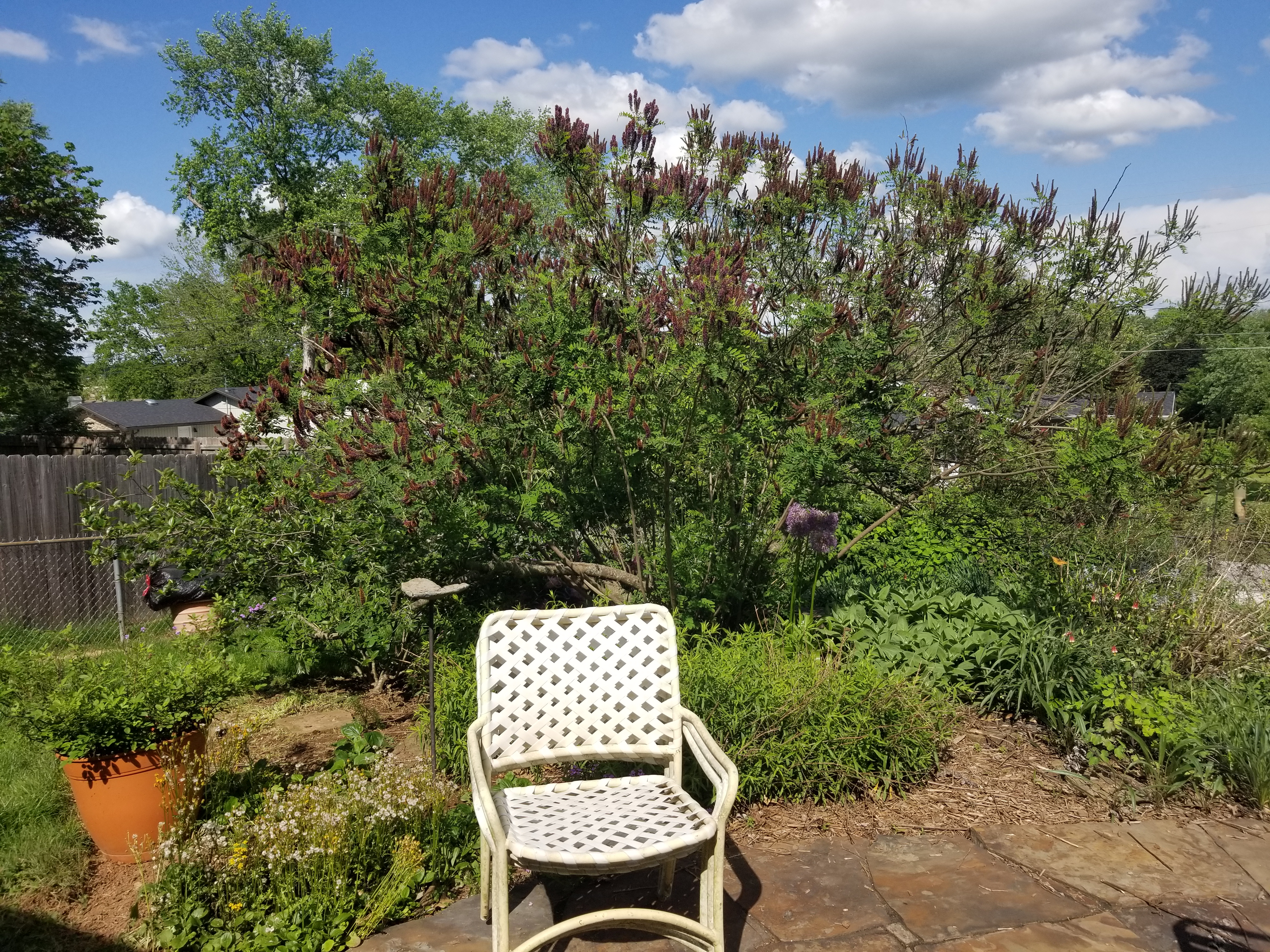
Honey mushrooms aren’t the only parasites in the woods, however. The rather homely appearing mushroom to the right is called Entoloma abortivum. It ordinarily is a decomposing fungus of leaf litter. However, its mycelium are capable of parasitizing the honey mushroom, parasitizing another parasite. When it invades the honey mushroom, it grows into a distorted mess called shrimp of the woods (see photo).

"Shrimp of the woods"

Unbelievably, shrimp of the woods is considered a choice edible. Seriously? In addition to its homely appearance, it needs to be carefully identified to avoid poisoning by other lookalikes (as if there are others that are a less appalling / more appealing species.) As my mother used to say back in the 1940's, "There is no accounting for taste" said the woman as she kissed her cow!"

So now we have chicken of the woods, hen of the woods, shrimp of the woods and lobster mushrooms. What’s next? Mark has just identified this new species, the pig of the woods, Swinus silvae-bowerii.

Pig of the woods - Swinus arboritus bowerii

Editor's note: Actually, this is not a Missouri fungus.  Mark tells me this actually was Fistulina hepatica, the ox tongue fungus which he photographed in Tasmania. It was a young specimen and he added the features, like lipstick on a pig!